Translate

Thursday, November 20, 2014

14.03 Napier: Rhythms Daily and Seasonal

3.A Morning Street Sweeper along Dickens Street near Clive Square, Napier

The photo above was taken on a recent morning in Napier’s CBD ('Central Business District') near a small park called Clive Square. I chose this photo as a lead to this week’s blogpost because in some ways it’s emblematic of the turn away from the stream-of-consciousness style of living characteristic of a tourist to the rhythms one joins when taking up residence anywhere. The morning street sweeper affords an opportunity to discourse on the domestic rhythms of life in Napier, especially in comparison to Te Awamutu (‘TA’), our previous ‘hometown’ in New Zealand.

When we lived in TA, our apartment was within an easy 10-to-15 minute walk of the CBD. It took that time or much less to reach a Countdown supermarket, up to a dozen restaurants or eateries, the Te Awamutu library, a Warehouse discount store, a Bunnings hardware store, the NZ Postshop (the NZ Post postoffice), and St John’s Anglican, which we regularly attended. It was an easy part of my morning workday rhythm to attend to domestic chores at various establishments in Te Awamutu's CBD. Here in Napier's Ahuriri district access to restaurants and tony shops is easy enough, but to reach a sizable supermarket or the library or the post office or almost any store, for example, one must be more intentional, arranging to have use of the family car, for example, or planning on a long walk.


To be sure, we have a small Four Square supermarket nearby in our Ahuriri neighborhood. And as is common in New Zealand cities and towns, our neighborhood has a 'dairy', which is Kiwiese for what Americans would call a convenience store. Dairies are typically family-run. As dairies go, the Ahuriri district has a nice one.
3.B Corner Store Ahuriri (83 Bridge Street)
And we have a plethora of cafés, as sure a sign as any that we are indeed in New Zealand (See Blogpost 13.18). But, as I say, if I've got more extensive or serious business to attend to I have to visit Napier's CBD, at least a 30-to-40-minute walk away. Serious grocery shopping would entail a visit to one of two Countdowns in the CBD (oddly just catty-corner from one another!) or to the local Pak'NSave. Here’s a pair of photos of the local Pak’NSave, like its mates, a warehouse-style, largely no-frills store. 

3.C Napier Pak'NSave

Once on a spur-of-the-moment visit to the Te Awamutu Countdown, I happened to walk past the town's Burger King drive-up window just as two ladies on horses rode up to order morning coffees (The Burger King was about 3 minutes from our TA apartment). I asked the ladies for permission to take photos of them having their morning coffees on horseback. They readily acceded. A photo or two of that occasion could have said much about the rhythm of life in Te Awamutu, but (alas) I failed to ask permission to publish the photos. So I didn't and won't publish them. And, in any event, probably no one or two photos could capture the elusive rhythms of Te Awamutu or any other place, including Napier. A picture may be worth a thousand words, but a few words, I hope, can be helpful.


Napier's rhythms are not those of a rural town, but of a port and tourist town, moreover, a town with significant light manufacturing enterprises and a town that serves as the center for an agricultural district known for its vineyards, wineries, and orchards. Jean and I came to Napier not because of anything I've just mentioned but because of Jean’s work. She resumed work as an outpatient psychiatrist on November 10th, undertaking to serve the Hawke’s Bay District Health Board (‘HBDHB’) as a locum tenens for three months.  In Te Awamutu as a locum tenens she worked two days weekly in our adopted hometown, two days in Te Kuiti, and one day weekly in Taumarunui. So there was a good deal of travel involved in her work when we were based in Te Awamutu. 


With the Hawke's Bay District Health Board she’ll be working virtually every weekday in Napier (with about 60,000 residents). The town has no hospital. Rather, Hastings, about 20 kilometers (12 miles) south of Napier, hosts the 400-bed Hawke’s Bay Hospital. Except for occasional staff meetings, Jean won’t be reporting to that hospital. Instead she'll ordinarily be reporting for work at the Napier Health Centre.


3.D Napier Health Centre (78 Wellesley Road)
3.E Artwork in Napier Health Centre Lobby Vestibule
3.F Services Offered at the Napier Health Centre

However, about once every three weeks she and other physicians are expected travel to a clinic maintained by the HBDHB at Wairoa, which like Napier is in the Hawke’s Bay Region. Wairoa is about 116 kilometers (or 72 miles) northeast of Napier on State Route 2, a trip that Google Map claims would take about 1 hour 25 minutes. My spiral-bound Kiwimaps North Island Complete Drivers Atlas predicts that that trip would take about 1 hour 50 minutes. The Atlas can be regarded as trustworthy, but I hasten to add that the imputed travel times the Atlas provides are probably predicated on the habits, practices, and experience of Kiwi drivers, not foreign drivers. Foreigners should add a ‘foreign fudge factor’ to any drive time derived from the likes of the Atlas. But I digress to the rhythms of travel. Let's go back to life in Napier.


Here in New Zealand it's late spring. I can't say that temperatures have decidedly warmed in the brief two weeks that we've been in Napier. But then seasonal variations, except in the high mountain regions, are moderated in New Zealand by its maritime climates. So the roller coaster ride of spring is somewhat less chilling and thrilling than the sort of thing one experiences in the middle of a continent. The great thing about spring is the lengthening days. That coupled with the observance of New Zealand Daylight Time insures that sunrises now are before 6 AM and sunsets after 8 PM at Napier's latitude (39.41 °S).

For Kiwis in school the exhilaration of spring is matched by the prospect of the school year's coming to an end. The school-year will be over by mid-December. Napier has four high schools, three of them state schools and one private: Taradale High School (a coeducational high school), Napier Boys' High School, Napier Girls' High School, and Sacred Heart College (a Catholic girls' high school). There are numerous intermediate and primary schools. Nearby here in the Ahuriri district, where we live, we have a primary school, the Port Ahuriri School, and up on Napier Hill there's another, Napier Central School.


3.G Entrance to Port Ahuriri School

3.F Entrance to Napier Central School
For the larger community, spring ushers in the main tourist season. Almost all the cruise ships that come calling arrive in the period from November until early April, though a few oddballs may arrive in October and May. About sixty or so cruise ships call on Napier during the cruise season. The primary attractions for the cruise tourists are the nearby wineries and Napier's Art Deco ambiance, subjects that I'm likely to turn to in future posts.

As for the sporting seasons, cricket is regarded as a summer sport but
—no surprise—league play has already begun. There are several cricket leagues of interest to Kiwis, the most exalted being that to which the Blackcaps belong. The Blackcaps play against national teams from Australia, India, Pakistan, and so forth. Football or soccer is a winter sport, again with a pyramid of men's and women's leagues, the national top spots being capped by the All Whites (men's soccer) and Football Ferns (women's soccer). 

The top of the sporting heap is occupied by rugby
—or 'footy' as Kiwis call it—and the top of the top is occupied by the All Blacks, whose very name plays a role in baptizing New Zealand teams in other sports, as the names 'Blackcaps' and 'All Whites' might suggest. As it happens, the All Blacks met the Argentina Pumas in a match at Napier's Maclean Stadium in September 2014. Obviously, Napier was proud to host this match and Air New Zealand, an All Blacks sponsor, was happy to promote the event—an easy sell in New Zealand. Here's a video from the June 2014 'selling' event in Napier.


And here below is a video of the outset of the All Blacks vs Pumas match. An All Blacks match couldn't get off to a proper start without the performance of a war haka.


The local rugby team is the Hawke's Bay Magpies. Unfortunately, the professional rugby season will just be getting underway about the time Jean and I are slated to leave in February 2015. 


The Christian liturgical season of Advent will soon be underway but, as is the case in the USA, retailers are touting their wares as requisites of a proper celebration of Christmas, a celebration with a decidedly Santa Claus cast to it. That's not surprising. But it is surprising that even here in the Southern Hemisphere Santa Claus begins his Christmas journeys from the North Pole. 


It remains to be seen what the Christmas season casts for religiously faithful Kiwis. This Christmas Day marks the 200th anniversary of the preaching of the Christian gospel in New Zealand. A pan-denomination effort, the Hope Project, is underway in part to mark this occasion and in part to stimulate a re-evangelization of the country. May that effort prove fruitful!


By reason of the International Date Line and New Zealand's occupying the first time zone to the west of the date line, the Waiapu Anglican Cathedral of St John the Evangelist (as the church's website notes) is the first cathedral in the world to greet each new day. Jean and I will probably be there to greet the onset of Christmas. And meanwhile, like other Kiwis, we will attend to our daily rounds. It is a blessing to be able to attend to those rounds in a land at peace and free of persecution.


Warm regards,

Tim (& Jean)


3.G Waiapu Cathedral Tower
3.H East Face of Waiapu Cathedral
3.I Waiapu Anglican Cathedral of St John the Evangelist (Hastings Street)


Thursday, November 13, 2014

14.02 Napier: Ahuriri & Napier Hill

2.A West Quay, Ahuriri, Napier
Officially Jean and I are now resident aliens in New Zealand. She entered the country under a work visa. I entered under an extended visitor visa. Oddly, two years ago when we lived in New Zealand for six months, we both entered with work visas (though it was understood I wasn’t to seek gainful employment). I often wondered whether Immigration New Zealand had made a mistake in issuing me a work visa. In any event I've no work visa this time and here we are again. 

New Zealand hasn't changed, but our appreciation of her has. In our our previous stay we lived in a rural town, Te Awamutu (TA). But this time we're in Napier, like TA in the North Island but unlike TA in being a port along New Zealand's Pacific coast. When we came to New Zealand for the first time two years ago the country was somewhat exotic. This time because of the felicities of our previous stay we were returning to a friend, as it were. Anyone who returns again and again to a certain lake or wilderness, to a favored city, town, or country place, or to a long-established vacation retreat knows the feeling. There is a treasure of happy memories coupled with an anticipation of renewal and even novelty.

As I mentioned in my preceding blogpost, most cities in New Zealand have more the feel of a big town. The exceptions to this rule are Auckland, Wellington, Christchurch and perhaps Hamilton and Dunedin. Be that as it may, Napier is regarded as a 'port city'. I won't argue with the port part of that claim. Given my interests in transportation, I was tempted to craft my first Napier blogpost around a portrait of Napier’s maritime face. I’ll probably eventually do that, but not in this post. For me to dwell on Napier's port and harbourage would be a self-indulgence. I'd rather not be like a tippling seaman unable to steer beyond the 'first bar on the right', an all-too-common hazard I discussed in Blogpost 13.09. 

We each have our habits, interests, and dispositions, which hopefully serve like gravity to keep us coherent and in our wonted orbits. While this gravitational coherence and ordered progress is generally helpful in a developed human being, our habits, interests, and dispositions can impair our ability to see anew and afresh what each day, each place, and each person presents to us or commands from us, thanks be to God.

Today’s post reflects the freshness of circumstance of the newly arrived. It doesn't present an overview of Napier. Nor does it even purport to offer what might be termed 'highlights' or 'critical takeways' about the town. For that one would be advised to take counsel for starters from the Napier i-Site, Napier's tourist information center. Instead, I offer up the peripatetic, ad hoc, and sometimes accidental views arising from the initial wanderings that Jean and I have made in the Napier district in which we now live—Ahuriri—and in the district to our immediate south and east—Napier Hill. 

We find ourselves living in a minimalist apartment building facing a fishing harbour in Ahuriri, a district on the north end of Napier. This district is the oldest part of Napier, serving initially as a fishing village but now hosting a veritable casserole of human activity. Art galleries, boutiques, web designers, adventure outfitters, bars, restaurants, and eateries often occupy buildings whose businesses were once solely dedicated to supporting the maritime trade. Here is a sampling of Ahuriri vistas.

2.B Morning Light on Waghorne St, Ahuriri, Napier

2.C Morning Light along Hardinge Rd, Ahuriri, with Port of Napier Beyond
2.D Early Evening on West Quay, Diners in the Background and a Few Vintage Cars in the Foreground
2.E Along Customs Quay, Ahuriri
2.F Old Customs House, Ahuriri


2.G West Quay (Left); Napier Sailing Club Docks (Right)
2.H New Ahuriri Housing along Domett St, with Hospital Hill in the Background
This past weekend Jean and I wandered around by car and on foot through the largely residential neighborhoods of the Napier Hill district. The district also contains the former Napier Hospital, still awaiting demolition (and site redevelopment) after being abandoned in 1998. The western end of Napier Hill bears the name 'Hospital Hill'. Near the old hospital are the Napier Botanical Gardens and the Old Napier Cemetery, which we happened upon. At the east end of Napier Hill is the Bluff Hill Domain and Lookout (‘Domain’ is Kiwiese for an urban park), from which one has a splendid view of the Pacific and, close at hand, the Port of Napier.

Here below are additional photos from our initial foray into the persona of Napier. These photos were taken on Napier Hill on Saturday 8 November 2014, two days following our rather cold, wet, and blustery arrival in Napier (Fresh snow had appeared on the highest hilltops!). Spring is a highly variable season even in New Zealand. But this Saturday was a glorious day.

Warm regards,

Tim (& Jean)

P.S. Napier's Hill's various parts have various names--Hospital Hill, Bluff Hill, for example--and often enough the locals simply refer to 'the Hill', which embraces the entirety. The entirety looks to be finally receiving a proper name, an old, Maori name that presumably antedates the arrival of the British. A Hawke's Bay Today article of 12 October 2015 discusses the prospect of the Hill's receiving the name 'Mataruahou'.


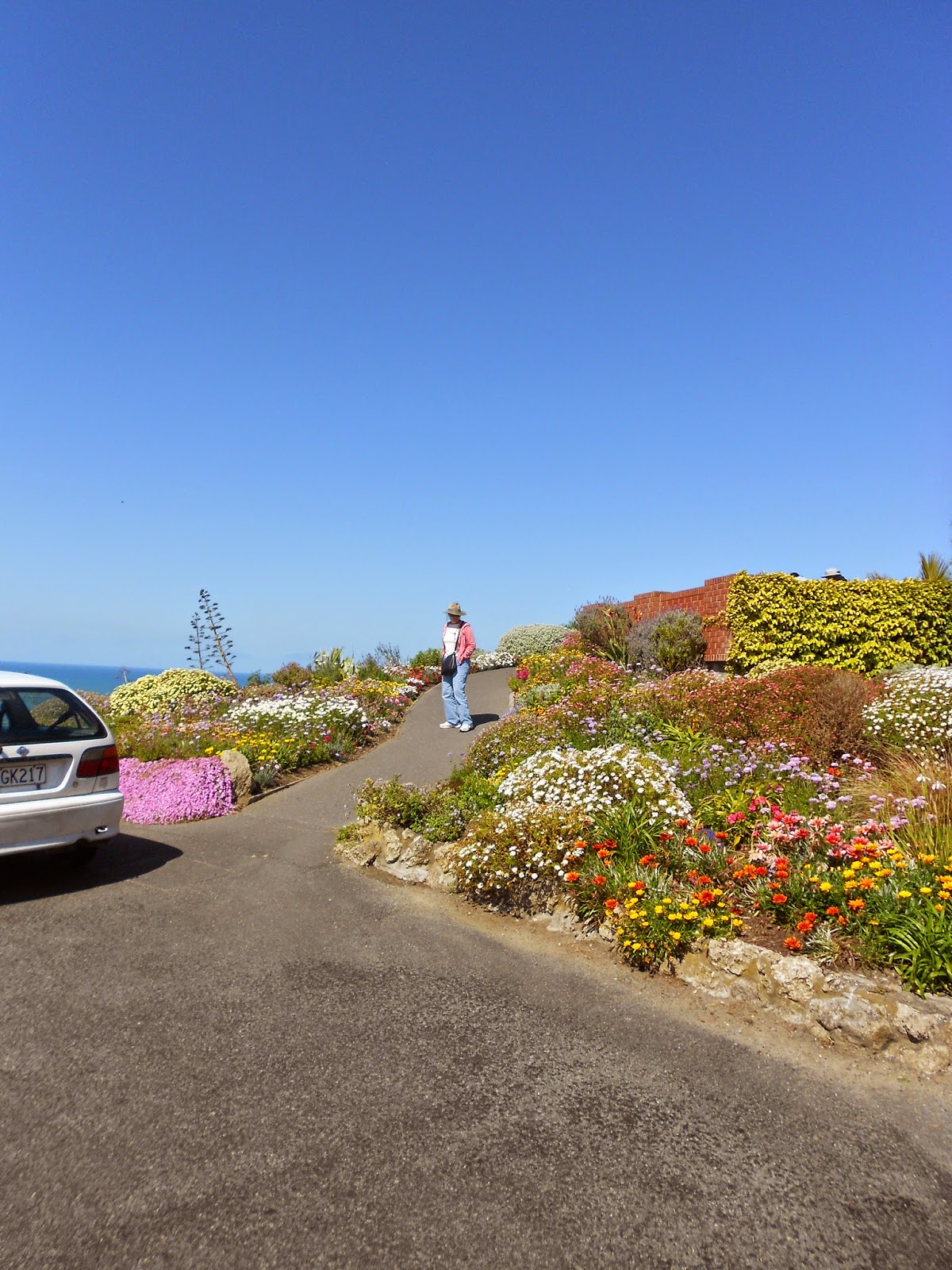
2.I Flowerbed outside Botanical Gardens
2.J Napier Botanical Gardens
2.K Two Bird of Paradise Flowers, Napier Botanical Gardens
2.L Exotic Palm, Napier Botanical Garden
2.M Old Napier Cemetery with Cape Kidnappers in the Distance
2.N In the Old Cemetery, Napier
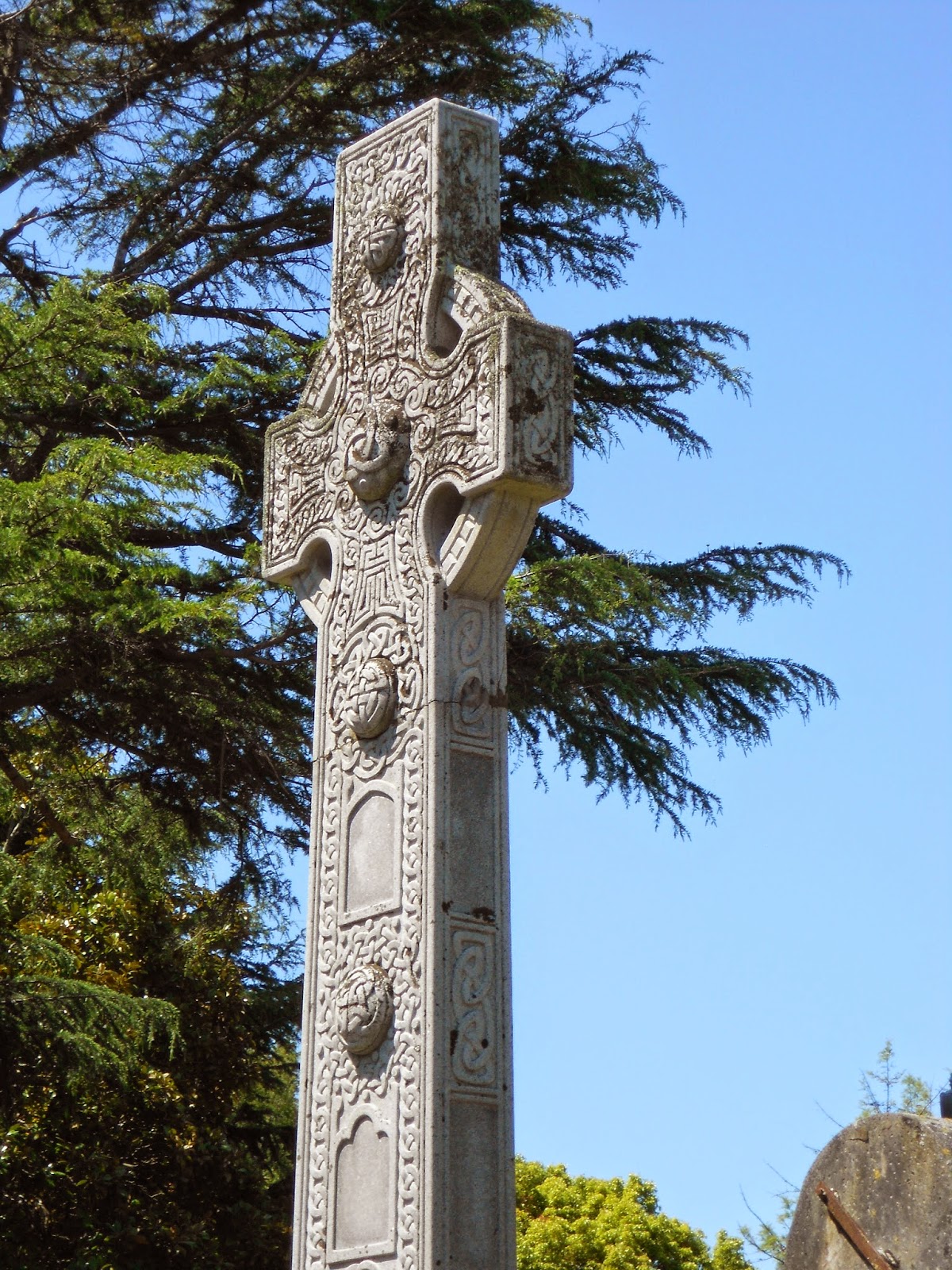
2.O A Celtic Cross Headstone, Old Napier Cemetery
2.P Flora at Bluff Hill Domain, Napier
2.Q Flora with the Pacific Ocean Beyond
2.R MS Dawn Princess in the Port of Napier
2.S View of the Ahuriri District from Bluff Hill Domain, Napier


Friday, November 7, 2014

14.01 Auckland: 'Hi' and 'Goodbye', Once Again

1.A Auckland Skyline View from Harbour Tour Cruise


About a third of all Kiwis live in Auckland, which has a population of around 1.5 million. It is New Zealand's largest city. Auckland is billed as the 'City of Sails', a moniker meant to suggest not only a city on water but one where a pleasant diversion can be enjoyed just beyond the shadow of skyscrapers. In July 2013, in New Zealand's winter, when Jean and I previously passed through, we can attest to at least some of the diversions, not least to the sailing.


1.B Sailboats in the Waters of Auckland's Outer Harbour


1.C Sailboats near the Auckland Harbour Bridge (from the East)


To Auckland's east lies the Hauraki Gulf (an indentation of the Pacific Ocean) and to the west lies the Tasman Sea, with ample harborage suitable for pleasure craft. In the central business district ('CBD') there are not only the theatres, restaurants, and shops you might expect, there are the opportunities for bungee jumping from the Sky Tower, the tallest edifice in the Southern Hemisphere. One can also bungee jump from the Auckland Harbour Bridge. Bungee jumping as a commercial activity began in Auckland in 1986 and has subsequently spread elsewhere around the world. Bungee jumping and jet boating, which was developed by a Kiwi (Bill Hamilton), are reflective of the robust spirit of adventure and enterprise that seem to be part and parcel of New Zealand's DNA.

1.D Sky Tower


1.E Bungee Jumping Station on the Underside of the Auckland Harbour Bridge
Jean and I are back in New Zealand not for extreme sports but, rather, for another locum tenens stint. In our previous venture Jean served with the Waikato District Health Board and we were eventually based in the lovely agricultural town of Te Awamutu. This time and for a shorter duration we're based in Napier, in the North Island, where Jean will be serving with the Hawke's Bay District Health Board. Napier, as it happens, was the destination of our first mini-trip after arriving in New Zealand in January 2013 (noted in my Post 13.03). I anticipate sharing more about Napier and about other Kiwi destinations that we manage to visit during our threesome-month stay in New Zealand.
One unlikely Kiwi destination, other than as a pass-thru, is Auckland. Auckland deserves more than a pass-thru, I suppose, especially if we've come so far from our hometown near Milwaukee, Wisconsin. It warrants attention, yes, but in this post I'm more comfortable with giving Auckland merely superficial attention, a 'hi' and 'goodbye', as it were. Were Jean and I to live in Auckland for a time, presumedly a succession of Auckland postings might provide a more comprehensive view of the city or at least a less superficial one.

If you were to talk to Kiwis who live outside Auckland, perhaps you'd find a good number who'd say that one posting from Auckland is enough. And perhaps even more than a few who'd say one posting is one too many. Auckland, as might be expected, has an outsized influence and at times resented role in the life of New Zealand. In that respect it's like New York vis-a-vis the USA; it's not the country's capital city but it is New Zealand's commercial and cultural capital. Auckland is an outlier in other ways, too, not least that it is one of the few cities in New Zealand that has the feel of a city, versus the feel of an outsized town. Most Kiwis, at least emotionally, find themselves tied to town and country living. For them a place like Auckland is somewhat alien and off-putting, with all its hustle and bustle. Before hustling off, I'll share the following observations.

First, Auckland is a port city; no surprise, given that it's located on an isthmus between the Pacific Ocean and the Tasman Sea. Jean and I favor harbour tours in maritime cities. And so I've got a bevy of photos from our previous pass-thru of the city. These photos aren't of good quality, but they do convey a sense of the current maritime trade and trademarks of maritime Auckland.

1.F Bean Rock Lighthouse in Auckland Harbour
1.G Cargo Cranes at the Ready, Auckland
1.H Cargo Cranes at Work, Auckland
1.I Auto Carrier Ship (Not an Auto Ferry)
1.J Container Ship Departing Auckland

While Auckland may or may not be New Zealand's most important port as measured by the value of its shipments, the country's largest port as measured by volume is Tauranga, south of Auckland on the North Island's Bay of Plenty. It's entirely possible that Tauranga will surpass Auckland's port on all accounts in the future because, among other factors, Auckland's current container port is hemmed in, effectively limiting expansion.

Now and in the future Auckland's most important port is its international airport, which reportedly accounts for seventy percent of all New Zealand's international travelers. There is only one other commercial airport in New Zealand able to land the long distance flights coming, say, from China or Japan or the Americas and that airport is in Christchurch, in the South Island. Absent a significant increase in population, Christchurch, New Zealand's third largest city, cannot possibly attract the rather long distance flights that end or begin in Auckland. Hence, unless one is traveling to or from Australia or one of the South Pacific islands, international travelers will almost certainly enter or leave New Zealand through the country's premier gateway, Auckland International Airport. 

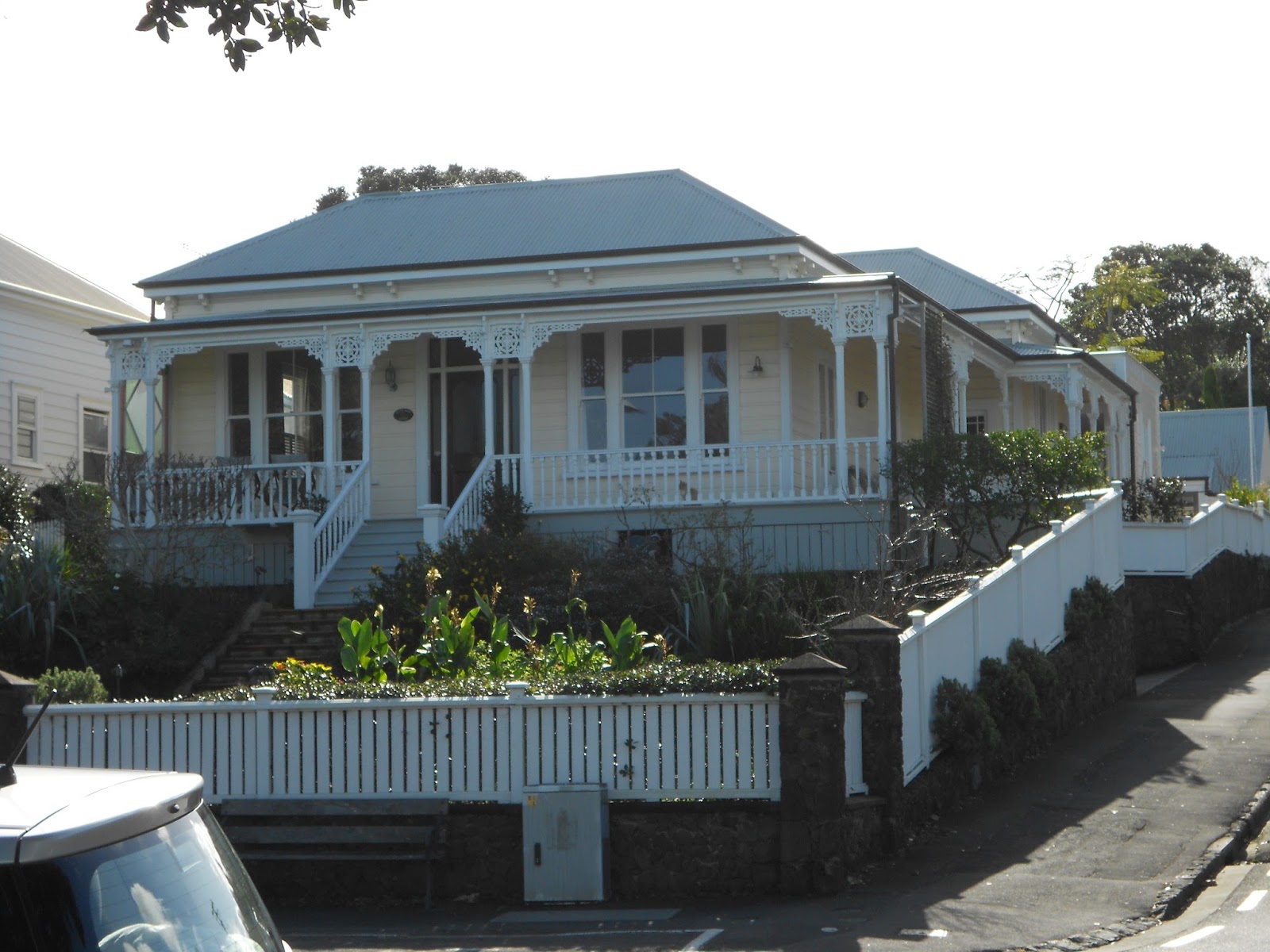
Secondly, while high-rise apartment buildings have sprouted around Auckland in a way that is uncharacteristic of Kiwi cities, the city continues to be characterized by numerous neighborhoods with single-level homes. In an earlier post (Post 13.10) I discussed characteristics of Kiwi homes. Herewith are some especially charming examples from Auckland's Devonport neighborhood, which is easily accessible by the ferry service connecting that neighborhood with the city's CBD. Photos below provide some sense of why Devonport is considered an attractive Auckland neighborhood (but then Auckland appears to have many such neighborhoods).

1.K A Devonport Home
1.L Another Devonport Home

1.M Devonport with Hauraki Gulf Maritime Park Beyond
1.N Devonport Seen from Hauraki Gulf Maritime Park
1.O A Tree Rooted in Devonport
1.P Departing the Devonport Ferry Dock

1.Q Auckland Ferry Docks & Ferry Terminal Building
1.R Auckland Ferry Terminal Building


Thirdly, Aucklanders travel to and from work by ferry, by car, and increasingly by rail. The Britomat Transport Center ('BTC'), shown above, entered transportation service in 2003, becoming the head station for various lines of the Auckland Transport rail network as well as the northern terminus of passenger service on the North Island Main Trunk Railway. It previously served as Auckland's central post office. Largely because of the opening of the BTC, annual ridership on Auckland Transport's rail lines has grown from about two million to over ten million people. The BTC is better placed in the central business district than was the previous terminus (As in real estate, in the railway business a key to success is location). All other things being equal, those visiting Auckland would be well advised to find lodging in Auckland's CBD, because of ready access there to rail and water transport and to bus lines and bus tour operators.

Finally, despite the them-versus-us factor bedeviling relations between Auckland and the rest of New Zealand, there are some deep commonalities. I already mentioned the single-level homes, which Kiwis everywhere love. High rises may now be commonplace in Auckland but one senses that (as in the rest of New Zealand) the town-like neighborhoods are cherished. And even some country practices are followed in the city. For example, sheep graze in city parks, a practice (we were told) governed by treaties that the Māori  made with the incoming British colonials. And given the volcanic origins of so much of the North Island landscape, it's perhaps entirely appropriate that Auckland is the only major city on the planet that is built on an active basaltic volcanic shield. Depending on the source consulted, you'll find reports of anywhere from forty to fifty extinct or dormant volcanoes sometimes underlying and sometimes crowning the Auckland landscape. You'll see one such crown jewel below. But enough.

It's 'hi' and 'goodbye', Auckland, and 'kia ora' or 'hello', New Zealand, once again, thanks be to God.

Warm regards, 
Tim & Jean 
1.T Sheep Grazing in an Auckland Park

1.U An Old Auckland Cone now 'Parkified'


1.V Auckland, City of Sails